


Global Average Surface Temperature
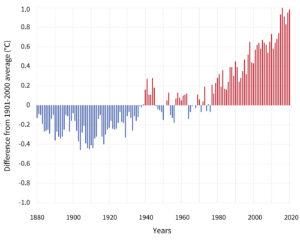
Yearly surface temperature compared to the 20th-century average from 1880–2020. Blue bars indicate cooler-than-average years; red bars show warmer-than-average years. NOAA Climate.gov graph, based on data from the National Centers for Environmental Information.
NOAA/NCEI
Measurements from thermometers and satellites unequivocally show that climate is warming. Each of the last four decades has been much warmer than the one before it, with each one setting a new and significant record for the highest global temperature. Confirmation of global warming also comes from melting glaciers, rising sea levels, arctic sea-ice retreat, reduced snow cover, and other changes. Long records of past climate show that the warming of the past 60 years is unprecedented in a long-term context.
Arctic Sea Ice Extent, September
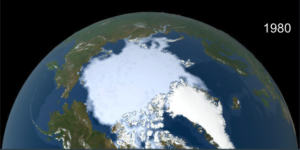
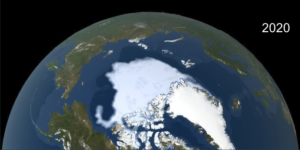
Mouse over the image to see the ice reduction between September of 1980 and September of 2020.
Runaway Glaciers in West Antarctica
Glaciologist Eric Rignot of NASA’s Jet Propulsion Laboratory and the University of California, Irvine, narrates this animation depicting the processes leading to the decline of six rapidly melting glaciers in West Antarctica. A new study by Rignot and others finds the rapidly melting section of the West Antarctic Ice Sheet appears to be in an irreversible state of decline, with nothing to stop the glaciers in this area from melting into the sea.


