


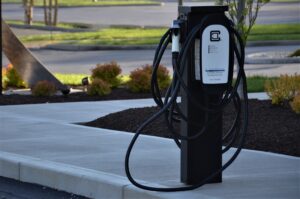
Cities are installing more electric vehicle chargers.
Cities and states have been accelerating their efforts to address climate change in recent years. Local governments have dozens of climate solution opportunities, including purchasing more efficient vehicles, adopting stronger building codes, purchasing renewable electricity, constructing or upgrading their mass transit systems, creating safe cycling routes, implementing measures to encourage walking in city centers, protecting green spaces, planting shade trees, and launching aggressive recycling, composting, and waste reduction programs.
What are states doing?
- Updating their Clean Energy and Climate Action Plans (e.g. Massachusetts, New York, and California)
- Strengthening statewide targets to reach net-zero emissions
- Decarbonizing the grid (i.e. getting electricity from non-carbon sources)
- Offering EV rebates at the point of sale and creating programs to help lower-income residents buy new and used electric cars.
- Building fast-chargers throughout the state
- Electrifying public buses and school buses
- Updating zoning laws to require municipalities to build more housing near public transportation and walkable communities
- Establishing building performance standards
- Creating incentive programs to help homeowners afford energy efficiency retrofits (e.g. better insulation, sealing off air leaks, replacing windows, and installing electric heating and cooling systems)
- Creating regulations that require utilities to transition to renewables
- Supporting technological innovation and job training programs
- Conserving and protecting natural lands (such as forests, grasslands, freshwater and riparian systems, wetlands, coastal and estuarine areas, watersheds, parks, urban and community forests, trails and other open spaces).
Economists have long suggested that the most efficient climate policy would be placing a price on carbon, making it no longer free to dump heat-trapping emissions into the atmosphere. Whether established by placing a tax on the carbon content of fossil fuels, or placing a cap on emissions and creating a market-based system for trading emissions permits, pricing carbon would end the era of free pollution and enable saving the cheapest tons first.
Some U.S. states have enacted carbon pricing systems. California launched its cap-and-trade system in 2013, and the state of Washington voted to enact its own carbon pricing system starting in January 2023. Twelve eastern states participate in the Regional Greenhouse Gas Initiative, a localized cap-and-invest program that sets an enforceable regional limit on the amount of carbon pollution that power plants are allowed to emit and sells pollution permits up to this limit through quarterly auctions. The Hawaii state senate has stated its intent to consider a carbon tax in 2022.
Another type of climate policy is a Clean Electricity Standard, which requires utilities to generate and sell electricity to meet ambitious clean energy targets by ramping up the percentage of carbon-free power sources in their portfolio over time until they reach 100%.
New York’s Clean Energy Standard is designed to fight climate change, reduce harmful air pollution, and ensure a diverse and reliable low carbon energy supply. It requires that 70% of New York’s electricity comes from renewable energy sources such as solar and wind by 2030.
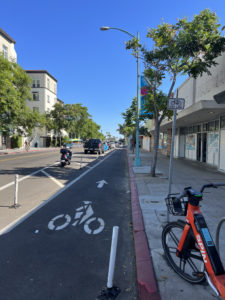
This semi-protected bike lane in San Diego keeps parking spaces on the outside of the bike lane, so cars don’t merge into bike traffic.
What are cities doing?
-
- Committing to local Climate Action Plans – Zero Energy Project
- Declaring “We Are Still In” to support climate action, this declaration was signed by more than 3,900 CEOs, mayors, governors, college presidents, and others.
- Mayors with “Our Cities – C40 Cities” are supporting and implementing climate action plans in line with the 1.5°C target of the Paris Agreement.
- Establishing community choice power and renewable energy options (e.g. San Diego Community Power)
- Establishing climate equity funds to supplement funding for green infrastructure projects within communities of concern
- 100% clean electricity for City government operations
- 100% renewable energy commitments
- Solar installed on City-owned buildings
- Energy storage citywide
- Commitments to reduce emissions from the building sector (e.g. Boston)
- Sustainable Transportation commitments (walking, biking, electrified mass transit, 100% electric city fleet, electric school bus fleet, etc…)
- Zero waste initiatives
- City divestment from fossil fuels
- City investment in local clean energy projects and technologies
- Promoting green local jobs
- Oversight and transparency tools to track the city’s progress on energy efficiency, carbon emissions and resiliency projects
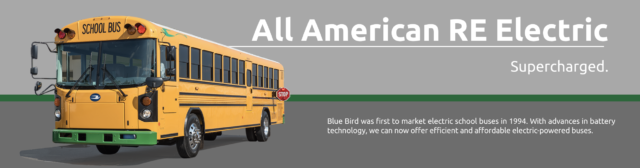
From Blue Bird All American RE Electric School Buses


