


Climate change is increasingly hindering efforts to meet the world’s food supply and nutritional needs. Climate change impacts – including weather extremes, such as droughts, floods and marine heatwaves – are putting strain on agriculture, aquaculture, forestry, and fisheries.
Climate change is already causing a range of impacts on U.S. food production, including crop losses from flooding, soil erosion, and a decline in winter chill needed for fruit and nut production. While a few states in the Northern Great Plains could see conditions conducive to expanded or alternative crop productivity in the years ahead, yields of most major U.S. crops are expected to decline due to increased heat, changes in water availability, extreme weather events, extended ranges for weeds, diseases, and pest outbreaks, and economically disruptive shifts in growing regions.
The latest IPCC report finds that under a very high emissions scenario, about one-third of current food production areas globally are projected to become unsuitable by the end of the century. Even a temperature rise of 2ºC (3.6ºF) will cause large disruptions to food production systems around the world. Social inequalities, such as those related to gender, socioeconomic status, and ethnicity, can amplify these effects for both producers and consumers. For example, women are more vulnerable to climate-related food insecurity than men. Effective adaptation, sustainable management practices, incorporating Indigenous and local knowledge, and diversifying crops and species will be key to preventing food supply crises.
Projected climate-related stresses on food production
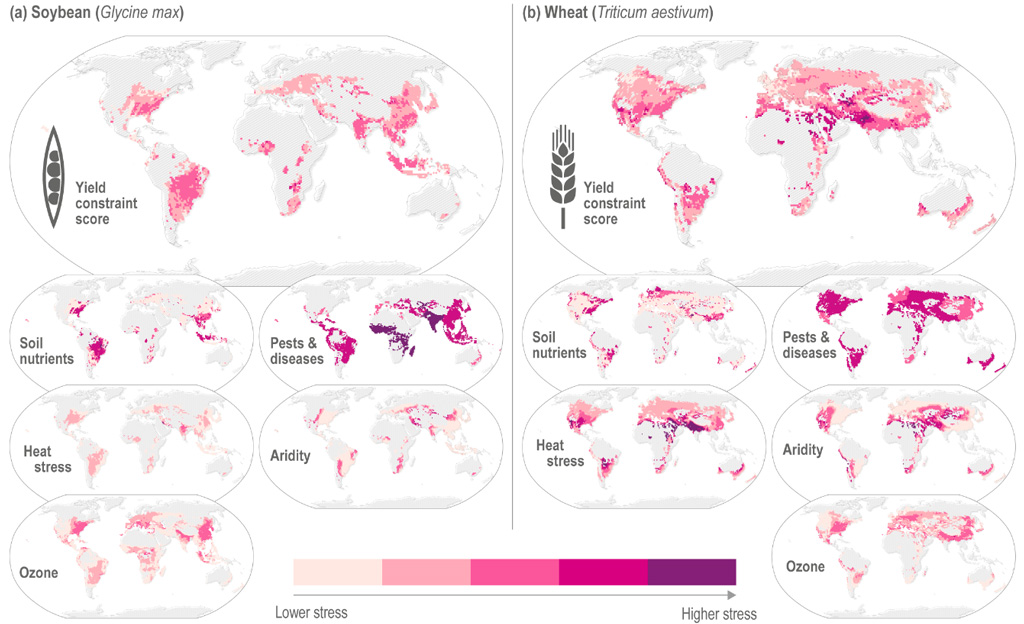
Maps showing the climate-change-related stressors on soya (left) and wheat (right) crops. The total yield constraint score (top map) is made up of the five lower maps (clockwise from top left): soil nutrients, pests and diseases, aridity, ozone and heat stress. Darker colors indicate higher stress for a combination of crop, location and stressor.


